of Morristown High School's original WJSV studios

WJSV 90.5 FM
Morristown, NJ
How Irene Trudel got her start in radio
(a tribute of sorts)
WJSV 90.5 FM
Morristown, NJ
How Irene Trudel got her start in radio
(a tribute of sorts)
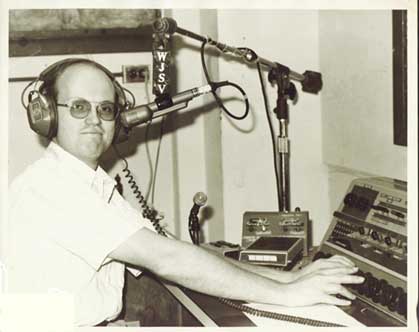
I guess every broadcaster gets their start at some little tiny station and WJSV was my humble beginning. In my case my involvement was for an odd reason. When I was in high school, I was painfully shy and knew I needed to do something about it.
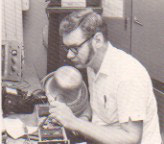
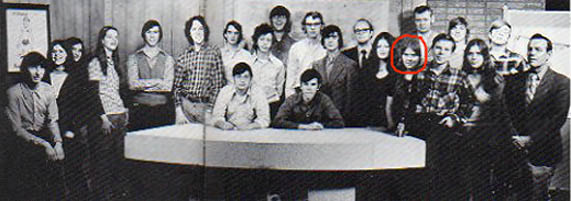
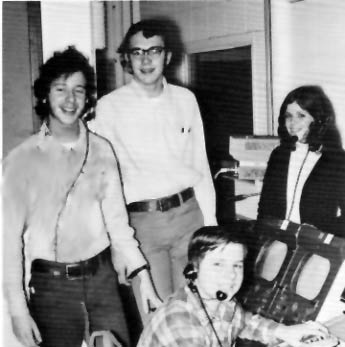
On February 22, 1971, Morristown High School began operating a radio station with the call letters WJSV --all of ten watts strong. A companion cable TV 'station' was also in operation. The equipment was lovingly wired by Physics teacher Bruce Lontka, (pictured upper right, in the station's only broadcast studio ca. 1975, photo courtesy of Kenton Chun), and technician Paul Werner (below, left), who later became WJSV's Chief Engineer (and retired in June 2000).
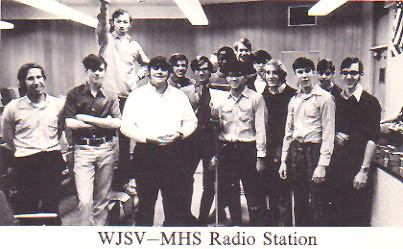
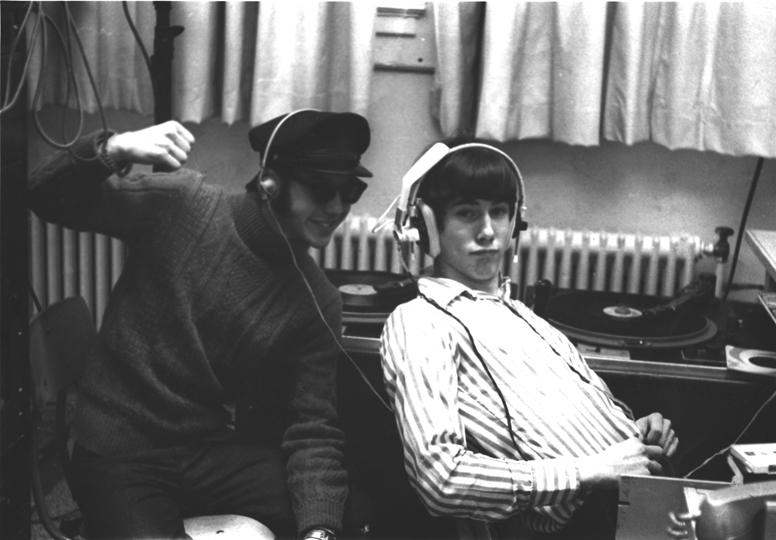
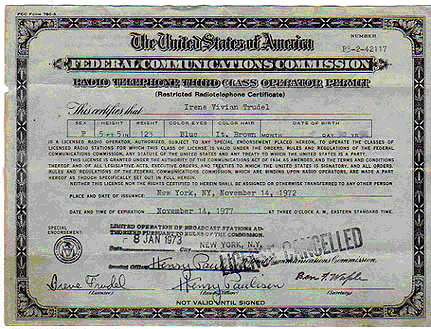
So I joined WJSV in the Fall of 1972 (but I'm not sure of the actual date. Some old news clippings I saved in my yearbooks lead me to believe it might've been late spring 1972). I dragged my brother Fred into it too, because I was such a mouse about doing anything alone. In those days you needed a Third Class Radiotelephone Operator Permit issued by the Federal Communications Commission office in order to be the lowest level of announcer (a D.J.) and to get one you had to take a test. Fred and I took a trip to the FCC office in Manhattan and both failed the technical part of the test the first time out. The second time we passed, and I remember when we arrived back at the station I was told, "Oh, good! You can take over on the air because someone has to leave." I was so terrified that I couldn't squeak out more than a timid station I.D.
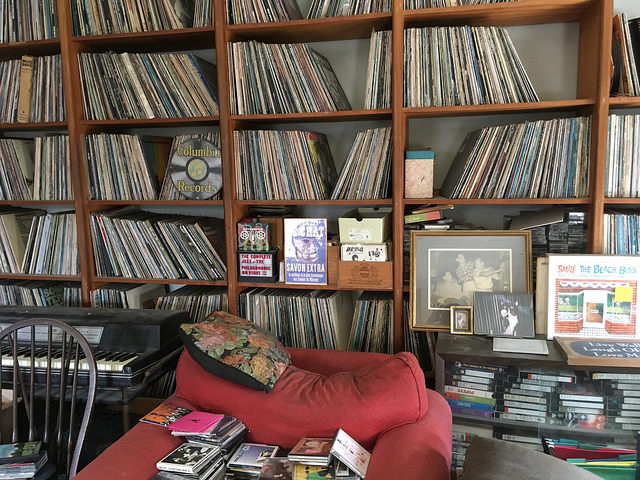 Mostly though, WJSV turned me on to a smattering of (then) obscure artists' records: The Incredible String Band, Lindisfarne, Loudon Wainwright III, The James Gang, Tonto's Expanding Headband, Amon Duul, Monty Python's Flying Circus, Firesign Theatre, Procol Harum, The Mothers of Invention, Aphrodite's Child, and assorted unpopular pop singles. Their record collection consisted of donations of scratchy records no longer wanted by our tiny listening public and whatever minor releases Columbia/Epic/Electra Records would send such an unimportant station (these were the only companies sending us regular mailings). DJs were required to play a few "Parent-Pleasing" numbers during their airshifts in those early days, leading me to drag in some of my folks' meager collection of Classical Music, Herb Alpert, and Les Paul. The Morristown Public Library also helped me supplement what I played on the air (to my amazement, their small collection ranged from Joan Baez' "Baptism" to Brian Wilson's "Smiley Smile" to Frank Zappa & The Mothers of Invention's "We're Only in It for the Money"). After I began to earn money, it wasn't long before I became a hopeless record collector, always looking for something new to share with the listeners.
As a sidebar, I need to make special mention of a few people who changed the direction of my radio career to embrace engineering and live music mixing. I was already interested in recording, branching out from my being asked to record local musicians at a coffeehouse for later broadcast on WJSV. I was hooked from the first time I dragged a reel to reel machine there to record, but after I left high school I drifted away from college and radio for a few years until I started attending County College of Morris in 1977.
So, of the people I'd like to credit, John Hagelbarger (former "Mr. Colonial" at Morristown HS, a role he told me he was not proud of) tops my list. John introduced me to the idea of working in a recording studio through his friend (and now mine) Don Sternecker. John had met Don through Drew University's music program in Madison, NJ. (Hagelbarger, it should be noted, had created his own pipe organ at home constructed out of various sized glass jars a keyboard and other ingenious bits of flotsam and jetsam. He's a very creative guy who didn't get enough credit from his high school peers.) While in college, Don had started his own recording studio-- Mix-O-Lydian (where the Bongos recorded their first singles,), which he later moved to Boonton, NJ and turned it into a thriving business, recording many bands important to the early Hoboken Music scene.
Don then took on an increasingly important role in my development. While attending college, I had to work on an internship related to communications to complete my degree requirements. Sternecker agreed to take me on, never having an intern before, and I wound up hanging out way past the required course time limit. I credit Don with teaching me the art of "having a good ear" --in other words, knowing how to balance a mix for live and recorded music. I passed many enjoyable hours hanging out, listening to Don create great recordings at Mix-O-Lydian on every kind of band, good and bad, listening to every kind of joke, good and band (Don's a world-class joketeller as well!) and I totally value his friendship, trust and willingness to take on an unknown like me. Without Don, I'd probably not even thought about mixing a live band, much less having them on a radio show. These days, Mix-O-Lydian Recording Studios can be found in the town of Delaware Water Gap, PA and on the web as well.
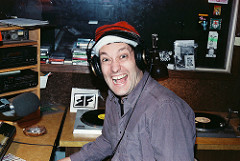
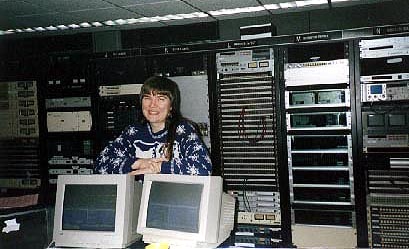
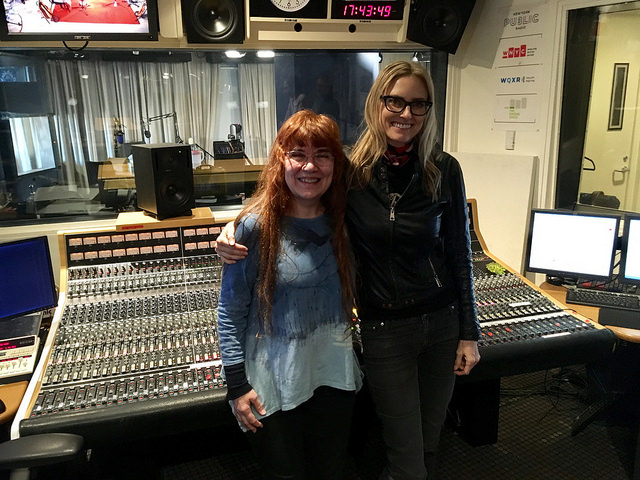
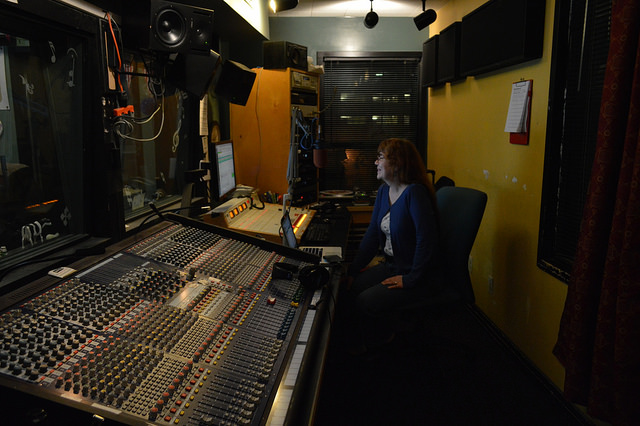 Currently, I host a weekly show on WFMU, and have been there since the autumn of 1986. When WFMU moved to the current Jersey City home, I helped wire up the studios (with the more capable direction of then-Chief Engineer John Fogarazzo).

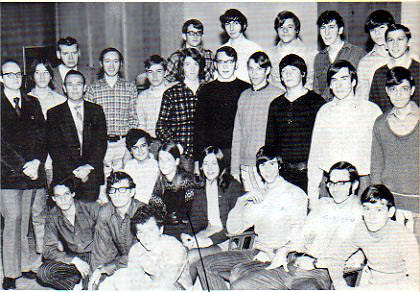
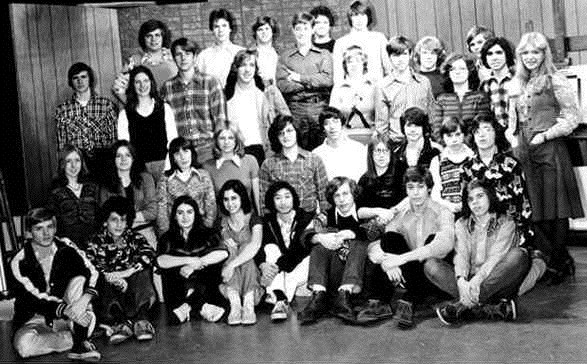
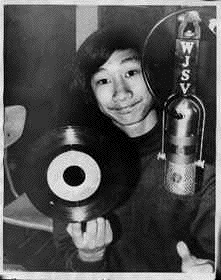

I make no claim on the accuracy of this information. But with
a little detective work, here's what I've uncovered on the web...
More will follow as I find it.
WJSV's call letters once belonged to another radio station that went on the air in 1928. The original WJSV was located in Mt. Vernon Hills, Virginia (and in conflicting data Alexandria, or Washington DC) on the dial at 1460 AM (FM broadcast wasn't viable until 1946). According to legend (or at least the story I was told when I joined the intrepid group of would-be broadcasters above) the folks in the original broadcast area believed the call letters were an acronym that stood for "Jesus Saves Virginia" but actually stood for James S. Vance (general manager of the Fellowship Forum--). In the early '40s, the station became WTOP. Blogger Jose Fritz has his own little obsessive page called Archane Radio Trivia that traces the origins of the station call letters. Even though many stations' call letters were assigned by the government you'll find more than a few who requested slogan acronyms to use as their call letters.
In addition to Vance, other people important to WJSV's development were broadcaster/writer/reporter Robert Trout, who throughout his long career was known as the "Iron Man of Radio," and Harry C. Butcher (1910-59), who was originally a Naval Aide to President Dwight Eisenhower. Butcher was either Station Manager or Program Director (depending on the post you look at) of radio station WJSV (which changed call letters to later WTOP after becoming a CBS affiliate) in Washington D.C. from 1932-1934 and Vice President in charge of WJSV from 1934-1942 . Harry was most likely brought in to wrestle control of the station from people with KKK leanings. Butcher may have been the person who coined the phrase "Fireside Chat" in relation to Franklin Delano Roosevelt's radio talks of the same name. In WJSV 1939 recorded its entire broadcast day (no small feat in the pre-audio tape era), which you can check out at theOld Time Radio site or on Internet Archive. Arthur Godfrey was a regular host on the original WJSV. You can find a newspaper listing from vintage WJSV here. Wikipedia also has a page devoted to WJSV.